跳转到主要内容
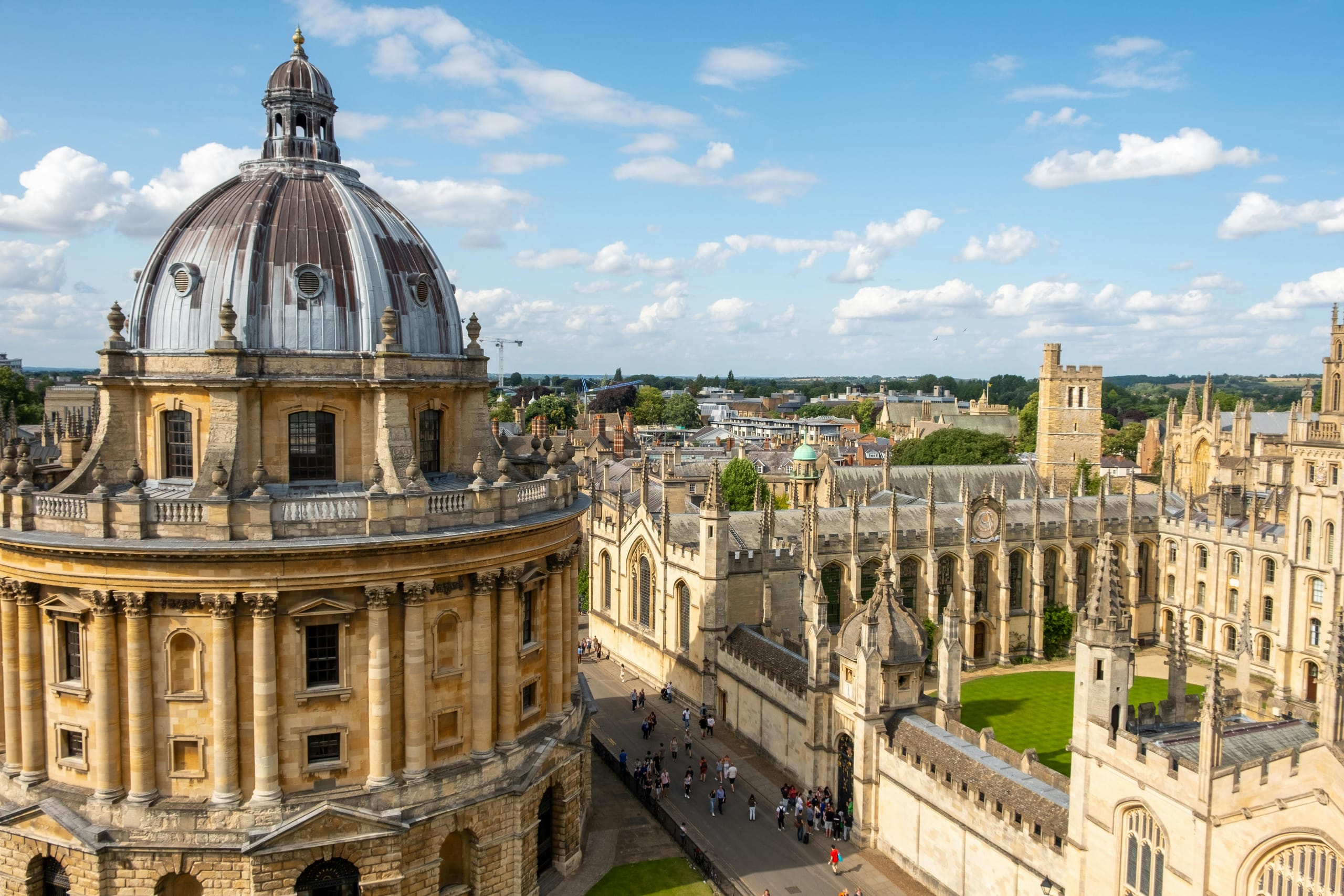
University of Oxford campus

2027 申请 · Oxbridge

如何申请 Oxford

The oldest university in the English-speaking world, consistently ranked #1 in the world.

  • c. 1096Founded
  • #1 THE WURGlobal rank
  • ~16%Offer rate
  • 39Colleges

专业指南

Oxford 专业一览

选择一个专业,查看完整的 2027 申请解析、成绩要求、笔试策略、面试真题与 Personal Statement 思路。

Admissions tests

The tests Oxford uses.

From 2026 onwards most UK admissions tests are delivered through Pearson VUE - registration closes weeks before test day. Legacy tests are shown so you can recognise them.

Oxford 官方链接

请务必以官方网站公布的要求为准。

概览

Oxford 一览

The University of Oxford is the oldest university in the English-speaking world, with evidence of teaching dating back to 1096. It consistently ranks among the top universities globally and is renowned for its tutorial system - weekly one-to-one or small-group sessions with leading academics that form the core of undergraduate teaching.

  • 01

    Oxford operates a collegiate system with 39 colleges, each providing accommodation, pastoral support, and a close-knit academic community. Admissions are highly competitive: around 23,000 applicants compete for approximately 3,300 undergraduate places each year, giving an overall offer rate of roughly 16%.

  • 02

    What sets Oxford apart is the depth and rigour of its academic programmes. Courses are often broader than at other universities (e.g., PPE combines three disciplines), and the tutorial system demands independent thinking from day one. For 2027 entry only five admissions tests are required across Oxford undergraduate courses - ESAT, TMUA, TARA, UCAT and LNAT - and many courses no longer have a written test at all.

为何选择

是什么让 Oxford 与众不同。

  • 01

    Tutorial system: unmatched personalised teaching with world-leading academics

  • 02

    Consistently ranked #1 globally (Times Higher Education World University Rankings)

  • 03

    College system providing a close-knit community within a large research university

  • 04

    39 colleges each with their own character, traditions, and facilities

  • 05

    Exceptional graduate outcomes across all sectors

  • 06

    Three eight-week terms allowing deep focus on each subject

是否适合

Oxford 适合你吗?

如果你符合以下情况,可能很适合……

  • 希望每周都能与学科专家进行一对一或小组教学。
  • 能够适应高强度的学术挑战:Oxford 的学生需要独立学习并具备临场应变能力。
  • 喜欢学院制:在世界顶尖研究型大学之中拥有一个更紧密的小社群。
  • 已为竞争激烈的申请做好准备(录取率约 16%),并能以优异成绩作为支撑。
  • 愿意在课纲之外深入探索:围绕专业广泛阅读、参加竞赛、加入社团。

如果你符合以下情况,或许可以考虑别处……

  • 更倾向于模块化的灵活选课或大量学分制选项,而非结构化、以单一专业为核心的学位。
  • 更愿意以大型讲座为主进行学习,而不希望每周接受一对一的深入考察。
  • 不喜欢由学院为你分配住宿或安排社交生活的方式。
  • 不打算参加入学笔试或应对高难度的面试。

The admissions year

申请流程与关键截止日期。

Oxford 申请周期的四个阶段:从最初的阅读书单到最终的录取通知。所示日期适用于 2027 年入学(2026 申请季)。

Prepare

Jun – Sep

  1. June

    Results

    Research & shortlist

    Attend an Oxford open day, narrow your subject and college shortlist, and start reading around your field for a substantive personal statement.

  2. July

    Open

    Draft personal statement

    Draft version one. Oxford tutors read personal statements for evidence of deep engagement - not extracurricular breadth.

  3. August

    Event

    Register for admissions tests

    Most 2027 entry tests are Pearson VUE-based and require pre-registration weeks before test day. Missing the registration window is the most common avoidable mistake.

  4. September

    Deadline

    Finalise UCAS application

    Collect references, finalise your statement, and submit early. The UCAS system can be slow in the final 48 hours.

Apply

Oct

  1. 15 October

    Deadline

    UCAS deadline

    All Oxford applications must be submitted by 18:00 UK time on 15 October. Applications submitted after this cannot be considered.

  2. 12–16 October

    Event

    Sit admissions tests

    For 2027 entry only ESAT, TMUA, TARA, UCAT or LNAT are required at Oxford, depending on subject. ESAT, TMUA and TARA sit in the 12-16 October 2026 Pearson VUE window (registration closes 28 September); UCAT is sat earlier, between July and September. Bring ID and your registration details.

Evaluate

Nov – Dec

  1. November

    Open

    Submit written work

    Humanities subjects may require 1-2 pieces of marked school work (deadline 10 November). Do not write new essays - tutors want your normal school output.

  2. Early December

    Results

    Shortlisting decisions

    Around 50-60% of applicants are shortlisted for interview. You will hear by early-mid December.

  3. Mid December

    Event

    Interviews

    2-3 interviews of 20-30 minutes each, all held online (via Microsoft Teams) for 2027 entry. Interviewers may include your first-choice college and a second college.

Decide

Jan

  1. Early January

    Results

    Decisions released

    All decisions released simultaneously - typically the second week of January. Offers, rejections, and deferred entry all communicated at once.

The competition

Offer rates by subject.

OxfordCambridge

Most recent published figures. Treat as directional - rates vary year to year and by college.

  1. Economics & Management
    7%
  2. Medicine
    9%
  3. Computer Science
    10%
  4. Mathematics
    11%
  5. Law
    14%
  6. PPE
    15%
  7. Engineering Science
    17%
  8. Physics
    21%
  9. History
    24%
  10. English
    24%
  11. Chemistry
    26%
  12. Classics
    40%
  13. Modern Languages
    43%

Source: Oxford official admissions statistics, most recent cycle. Figures rounded.

The interview

The interview is a working the tutorial system.

01 · The model

The tutorial system

Undergraduates at Oxford are taught weekly in groups of one to three by an academic whose research is in the topic you are studying. You submit work in advance - a problem set, an essay, a translation - and spend the hour defending, revising, and rebuilding it in front of your tutor. There is nowhere to hide: the work is yours, the reading is yours, and the argument has to stand up to live cross-examination.

02 · Why it works

Thinking under live pressure.

Tutorials work because they force you to think aloud under pressure with someone who knows the subject better than you do. You cannot memorise your way through them. What you build instead is the ability to hold a position, notice when it is wrong, and rebuild it in real time - the core habit of serious academic work. It is also how most world-class research actually gets done: two or three people in a room, unpicking an idea.

03 · The interview

A working the tutorial system.

Oxford interviews are a working tutorial. You are given an unseen problem, source, or piece of writing and asked to reason through it in front of the interviewer. The tutor is not grading your polish; they are watching whether you are teachable in this format - can you think out loud, can you take a prompt, can you revise your answer mid-sentence without getting defensive. Being wrong is fine and often expected. Being confidently wrong and unable to move is what closes doors. The signal they want is simple: would a year of weekly tutorials with this student be productive, or painful?

The college system

39
colleges.

From first principles

Oxford is not one university in the way most universities are. It is 39 self-governing colleges plus a central university, sharing the same name and the same degrees. You apply to (or are allocated to) one college. That college is where you live for at least your first year, where you eat most of your meals, where your pastoral tutor works, and where your weekly tutorials happen. Your lectures and exams come from the central university department, and your degree certificate says "Oxford" not the college name. But the texture of your three years - who you live with, who teaches you weekly, which library is yours, where you play sport, who hosts formal dinner - is shaped almost entirely by college.

Why visiting matters

Colleges look similar on paper and feel very different in person. Some are 800 years old and built around cloistered quads; others are 20th-century and run on a flatter, more informal culture. Some have 300 undergraduates, some have 1,400. Some sit on the main tourist streets, some are a 20-minute walk out. If you can get to an Oxford open day (usually June and September), visit three or four colleges in the same afternoon - you will feel the difference immediately. The one that feels like you could live there for three years is almost always the right answer; admissions outcomes equalise across colleges for a given subject, so fit is the decision you actually get to make.

Choose the fit

Choose the college that feels right - not the one with the best-looking offer rate. Offer rates vary mostly with applicant pool, not college quality. If you cannot visit, read three or four college websites and watch their current-student videos. If you still cannot decide, submit an Open Application: you are allocated to a college with spare capacity and the admissions process treats you identically.

Reallocation

Unlike Cambridge, Oxford does not use a pool. If your first-choice college cannot offer you a place but rates you highly, a handful of subjects will reallocate you to another college on the day of interview. Reallocation is subject-specific and far less systematic than Cambridge pooling.

Individual college guides

A starting shortlist.

Detailed per-college guides are in production. The list below is a starting point - treat the snapshots as broad strokes, not full profiles.

  • Balliol College

    Small, central, famously political

    Guide coming soon

  • Christ Church

    Grand, large, very visible

    Guide coming soon

  • Magdalen College

    Medium, riverside, strong sciences

    Guide coming soon

  • Merton College

    Small, quiet, academically intense

    Guide coming soon

  • New College

    Large, central, mixed strengths

    Guide coming soon

  • St John's College

    Wealthy, supportive, strong humanities

    Guide coming soon

  • Trinity College

    Small, central, broad subject strength

    Guide coming soon

  • Worcester College

    Medium, gardens, arts-leaning

    Guide coming soon

Oxford has more colleges than the eight shown here - this is a deliberately small starter set. If you want help picking, a 30-minute call with a graduate tutor is usually faster than reading 39 prospectuses.

提交作业

需提交的论文与作品集。

A number of Oxford humanities subjects require submitted written work, notably History, English, Classics and Theology. Modern Languages dropped both its admissions test and its written-work requirement for 2027 entry, so always check your course page. Tutors want to see marked school work, ideally from the last 12 months, in the subject you are applying for. Do not produce new work specifically for Oxford: tutors explicitly want your normal classroom output, not a polished performance. Clean scans, teacher mark comments visible, and a brief note explaining the task are the expected format. Deadline is 10 November.

国际学生

来自英国以外的申请者。

IELTS

7.5 overall with 7.0 in each component (higher-level requirement)

TOEFL

110 overall (L22, R24, S25, W24). Note: TOEFL tests taken from 21 January 2026 are temporarily not accepted while Oxford reviews the revised test; use IELTS or another accepted test instead

Be realistic. Roughly two in five Oxford applicants are international, and the places are not reserved: you are competing against the strongest UK, EU and global candidates for the same seats. Predicted 38-40 at IB with 6s and 7s at Higher Level, a 4.0 GPA with AP 5s, or equivalent national top-band grades are the baseline, not a differentiator. Where your course sets an admissions test (17 courses do for 2027 entry), the score carries decisive shortlisting weight, and the international cohort sitting it is exceptionally strong. You can absolutely get in from outside the UK, but strong grades alone will not guarantee an interview. Plan for any test seriously, sit it at a Pearson VUE centre in-region, and build a personal statement that shows real engagement with the subject beyond school. Oxford accepts most major qualifications: IB (38-40 with 666-776 at HL depending on course), SAT/ACT with AP scores, Abitur, and Baccalauréat. The Chinese Gaokao is not accepted on its own: Gaokao-track students need an accepted qualification such as A-Levels or the IB. Check the official site for your country. Costs are meaningful: overseas tuition is £37,380-£62,820 per year for 2026 entry, published as a single figure with no separate college fee, on top of living costs of £15,000-£18,000 per year.

背景因素评估

Oxford 如何看待你的背景。

  • Oxford flags applications from UK students whose schools perform below average at A-Level, who live in low-participation areas (POLAR4 quintiles 1 and 2), or who have been in care.

  • Flagged applicants are still held to the same academic standard, but tutors are directed to interpret grades and personal statements in context.

  • Opportunity Oxford is a free academic bridging programme for selected UK offer-holders from under-represented backgrounds: a six-week online course over the summer plus a two-week residential in Oxford before term starts. There is no separate application.

  • UNIQ is Oxford's free residential summer school for UK state school students in Year 12 - strong UNIQ performance is noted at shortlisting.

  • Contextual flags do not lower the academic offer, but they can push a borderline applicant over the line at shortlisting and final-decision stages.

费用与资助

费用一览。

英国本土学费

£9,790 per year (UK students, 2026/27; £10,050 announced for 2027/28)

国际学生学费

£37,380 – £62,820 per year for 2026 entry (varies by subject; clinical Medicine years are higher, arts & humanities lower). Published as a single figure: there is no separate college fee for undergraduates

助学金与奖学金

The Oxford Bursary is automatic for UK students from households earning under £50,000 and offers up to £6,000 per year. Crankstart Scholarships provide £6,260 per year plus mentoring for UK students from households under £32,500. Need-based support for international students is limited - check Reach Oxford Scholarships and individual college scholarships.

知名校友

你将与之为伍的人。

  • 31 British Prime Ministers
  • Stephen Hawking (BA Physics)
  • Oscar Wilde
  • T. E. Lawrence
  • Tony Blair
  • Theresa May
  • Indira Gandhi
  • Aung San Suu Kyi
  • Malala Yousafzai
  • Rowan Atkinson
  • Hugh Grant
  • Emma Watson
  • J. R. R. Tolkien (faculty)
  • C. S. Lewis (faculty)

科研优势

Oxford 的领先领域。

  1. 01

    #1 globally in Medicine (THE subject rankings)

  2. 02

    Home to the Oxford–AstraZeneca COVID-19 vaccine

  3. 03

    Leading centre for AI safety and machine learning

  4. 04

    Unmatched Classics and Ancient History archives

  5. 05

    Nobel Prizes: over 70 affiliated laureates

Tutor-desk advice

What our tutors actually tell Oxford applicants.

Read in order. Each step follows from the one before - this is how the application year actually unfolds, not a grab-bag of tips.

  1. 1

    Start

    Know the format. Research the specific test and interview style for your subject so nothing on the day is new information.

  2. 2

    Prepare

    Score well on the test. Where your course sets one, the test score is the strongest shortlisting signal: polished personal statements cannot compensate for a weak paper.

  3. 3

    Test day

    Engage deeply with any pre-reading. Some subjects send an unseen text or problem ahead of the interview, normally the day before; the applicants who think carefully about it stand out within minutes.

  4. 4

    Interview

    Be correctable. Tutors want to see you notice your own errors and revise live. Confidently wrong and unwilling to move is the fastest way out.

  5. 5

    Decide

    Choose a college on fit, not on offer rate. Reallocation equalises outcomes across colleges within each subject - go where you could live happily for three years.

横向对比

Oxford 横向对比。

  1. vs Cambridge

    Oxford is generally stronger in humanities and social sciences; Cambridge leads in STEM. Oxford uses tutorials (1-3 students); Cambridge uses supervisions (same format, different name). Oxford interviews fewer applicants but makes more offers from those shortlisted; Cambridge interviews almost everyone and uses the Winter Pool. You can only apply to one.

  2. vs Imperial

    Imperial is a pure STEM powerhouse with a central London location and tighter industry links. Oxford offers a broader intellectual environment - you can read PPE, Classics, or Modern Languages, none of which Imperial teaches. Imperial has no college system; if you want an all-university college community, Oxford wins.

  3. vs UCL

    UCL is much larger, more urban, and secular by tradition. Oxford is collegiate, tutorial-based, and markedly more selective. UCL is often the stronger choice for students who want London and modular flexibility; Oxford for those who want depth, tutorials, and a college home.

常见问题

Oxford 申请常见问题解答。

Can I apply to both Oxford and Cambridge?

No. You cannot apply to both Oxford and Cambridge in the same admissions cycle. You must choose one. The only exception is for Organ Scholars.

Does my college choice matter?

All colleges offer the same degree and access to university facilities. However, colleges vary in size, location, and culture. If you make an open application, you will be allocated to a college that has capacity.

What are admissions tests like at Oxford?

Oxford uses several different admissions tests depending on the subject, and many courses have no test at all. The UAT-UK tests (ESAT, TMUA, TARA) are sat in a single Pearson VUE window on 12-16 October 2026; UCAT runs earlier, from July to September. Tests typically assess problem-solving and subject-specific skills rather than requiring extra content beyond A-Level.

How competitive is Oxford really?

The overall offer rate is about 16%, but this varies dramatically by subject. Medicine and Economics & Management are the most competitive (under 10%), while some humanities subjects have offer rates above 25%.

让专业导师助力你的 Oxford 申请。

预约与一位熟悉 Oxford 申请流程的 Oxford、Cambridge 毕业导师免费咨询。

预约免费咨询